
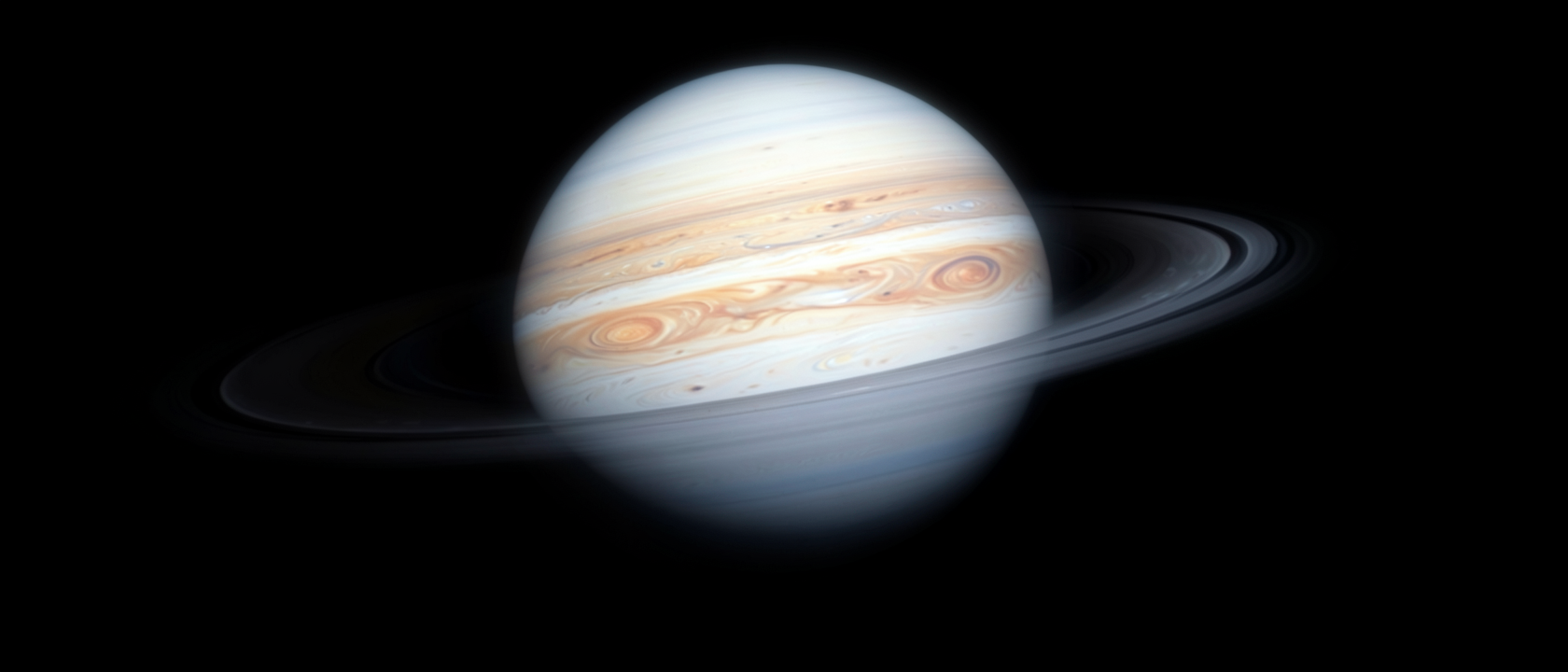
A Year That’s Over Before Your Shift Ends
Picture a year that starts right after you clock in and wraps up before you clock out. One complete lap around its star takes this planet only 20,388.46 seconds, five hours and forty minutes, start to finish. Spend an ordinary afternoon running errands and you could, in principle, watch its entire year begin and end before dinner.
The Measuring Stick: Earth’s Year, Shrunk to a Clock Face
Earth’s own orbit, the one every birthday candle already counts, takes about 3.156 × 10⁷ seconds. That’s a sidereal year, the time for one circuit measured against the fixed background stars rather than the changing seasons. Divide the two numbers and this planet’s year comes out to roughly 6.461 × 10⁻⁴ of Earth’s, about 1 part in 1,548. Flip the ratio and Earth’s year runs some 1,548 times longer than a year there.
Line up two clocks. While Earth’s hour hand creeps through a single slow circuit, this planet’s year would have looped past more than 1,500 times. That’s a comparison of rhythm, not distance, nobody has published how many kilometers actually separate this planet from its star. The one distance on record for the system is how far the whole pair sits from Earth: about 609 light-years, drawn from parallax, the tiny shift in a star’s apparent position that Earth’s own orbit produces across six months. A light-year is a distance, not a wait, how far light travels in a year, never a stretch of time itself.
How We Know: A Star Dimming Every 5.7 Hours
This period came from the transit method: watching a star’s brightness closely enough to catch the small, repeating dip caused by a companion crossing in front of it. One dip gives a rough period; dozens of repeats, timed precisely, tighten the number to a precision better than a tenth of a second, which is exactly what happened here.
The planet’s catalog designation, ZTF J1230-2655 b, starts with ZTF, for the Zwicky Transient Facility, a wide-field camera at Palomar Observatory that scans broad stretches of sky night after night, built to notice exactly this kind of star, one dimming every 5.7 hours. ZTF first flagged the pair as eclipsing; follow-up timing from the ATLAS sky survey, the high-speed camera system ULTRACAM, and the spectrograph X-shooter confirmed in 2025 that the eclipsing body was planet-sized, not a second star. An orbital inclination of 86.7 degrees, accurate to three-tenths of a degree, shows the orbit is tipped almost exactly edge-on to Earth, the reason the transit is visible at all.
The discovery sits in a 2025 paper by Parsons and colleagues, titled, tellingly, “Two Almost Planetary Mass Survivors of Common Envelope Evolution.” It frames both bodies in the system as survivors of a shared stellar envelope, material the dying star and its companion once moved through together before the star collapsed into what it is now: a white dwarf, the Earth-sized, burned-out core a star leaves behind once it sheds its outer layers. That white dwarf’s own surface runs to about 10,000 K, measured from its spectrum. NASA’s public catalog page lists the host as a “B-type star,” but the underlying archive data and the discovery paper itself agree instead on white dwarf, a known mismatch between a summary page and the full record.
How Close Counts as Close
The archive doesn’t give the orbit’s size in kilometers, only a ratio: 1.400 times the white dwarf’s own radius, give or take 0.012. In plain terms, the planet circles at barely one and a half stellar radii out, close enough that there’s almost no gap, relative to the star’s size, between its surface and the planet skimming past it. What’s measured is the shape of the brightness dip, not a tape measure laid between the two.
A planet that tight against a star with a surface near 10,000 K should run hot by any ordinary measure. Some public listings attach a specific equilibrium temperature and insolation value to this planet, but those exact figures could not be confirmed against the discovery paper, so they are left out here rather than stated as settled.
What’s Still Open
Three things aren’t nailed down. The planet’s true distance from its star, in kilometers rather than a ratio, isn’t in the published record. Its mass is capped, not directly measured: the archive lists an upper limit of about 7,024 Earth masses, roughly 22.1 Jupiter masses, drawn from the absence of a detectable dynamical signal rather than a direct measurement. The real mass could sit anywhere under that ceiling, which is exactly why calling this a giant planet versus something closer to a brown dwarf remains unsettled. High-speed images from ULTRACAM never directly caught the companion’s own light; using the system’s measured distance, researchers could only place a limit on its absolute magnitude, astronomers’ scale for intrinsic brightness, where a higher number means dimmer, of fainter than 16.7, consistent with something cooler than spectral type L2, the dim end of the brown-dwarf and giant-planet range, though not direct confirmation of what the object actually is.
Nobody has photographed this planet, and nobody is likely to soon. At 609 light-years away, with a radius of 13.787 Earth radii, about 54,560 miles (87,800 kilometers) from center to edge, it is too small and too faint to resolve as anything but a point of light. What astronomers study instead is a light curve: a graph of brightness dipping every 20,388.46 seconds. That graph, not a photograph, is the real evidence behind every number here.