
HEADLINE:
Kepler-245 d’s catalog density: 11.1 kg/m³, thinner than foam
ARTICLE:
The Planet That Was Supposed to Float
A world carrying the mass of 21.6 Earths ought to be heavy stuff, rock, metal, or gas under real pressure. One number attached to Kepler-245 d says otherwise: a bulk density of just 11.1 kilograms per cubic meter, supposedly lighter than the foam packed around a new television. Run the planet’s own catalog mass and radius through the math, though, and that figure falls apart. The corrected number lands close to four times denser than water, nowhere near a puffball.
The Measuring Stick: Water, Not Foam
Kepler-245 d’s mass is listed at 1.290 × 10^26 kilograms, or 21.6 times Earth’s mass, a measure of matter, not weight, since weight depends on gravity and there’s no scale big enough to put a planet on. Its radius, worked out from the same catalog entry, comes to roughly 11,800 miles (1.9 × 10^7 meters), a little over three times Earth’s radius, not its diameter. Divide that mass by the volume of a sphere that size and the bulk density comes out to about 4.29 × 10^3 kilograms per cubic meter, 4.29 grams per cubic centimeter.
Set that next to things people already have a feel for. Water sits at 1.000 gram per cubic centimeter; Kepler-245 d is roughly four times denser than that, meaning it sinks, it doesn’t float. Earth itself averages 5.514 grams per cubic centimeter; Kepler-245 d comes in around 0.78 times that, dense, just not quite Earth-dense. Styrofoam packaging, the actual material behind the original claim, runs about 20 to 50 kilograms per cubic meter. Kepler-245 d is roughly 100 times denser than that foam, not lighter than it.
How We Know
Kepler-245 d turned up in data from NASA’s Kepler space telescope, with its discovery announced in 2014, through the transit method: Kepler watched the star Kepler-245 dim on a repeating schedule every time the planet crossed in front of it. That dimming, recurring every 36.3 days, marks a circular orbit, eccentricity of 0.0, sitting at 0.202 astronomical units, or about 18.8 million miles (3.022 × 10^10 meters), from its star. An astronomical unit, or AU, is the Earth-Sun distance: about 93 million miles (149.6 million kilometers). Kepler-245 d orbits at roughly a fifth of that.
The depth of the transit’s dip gives the radius directly. The mass is a separate catalog figure, and the record doesn’t specify which method produced it, a wobble in the star’s light, timing shifts among other planets in the system, or a modeled relationship between mass and radius. That’s an open question. Density, in turn, is neither purely measured nor purely modeled: it’s one number divided by another, carrying whatever uncertainty each one carries.
What’s Estimated, Not Measured
The planet’s equilibrium temperature, a modeled figure based on starlight and distance, not a thermometer reading, works out to about 341°F (445 K). The same modeling puts the sunlight reaching Kepler-245 d at roughly 12,918.6 watts per square meter, about 9.49 times what Earth receives from the Sun (1,361 W/m2). Both numbers assume a reflectivity for the planet that hasn’t been checked directly.
The host star, Kepler-245, is a K-type star, spectral type K1, cooler and smaller than the Sun: about 0.8 solar masses, 0.8 solar radii, and a surface temperature near 8,720°F (5,100 K). It sits roughly 2,878.8 light-years away, a light-year is the distance light covers in a year, about 5.88 trillion miles, though one alternate figure converts to a distance about 2% shorter, and the two haven’t been reconciled.
The Picture
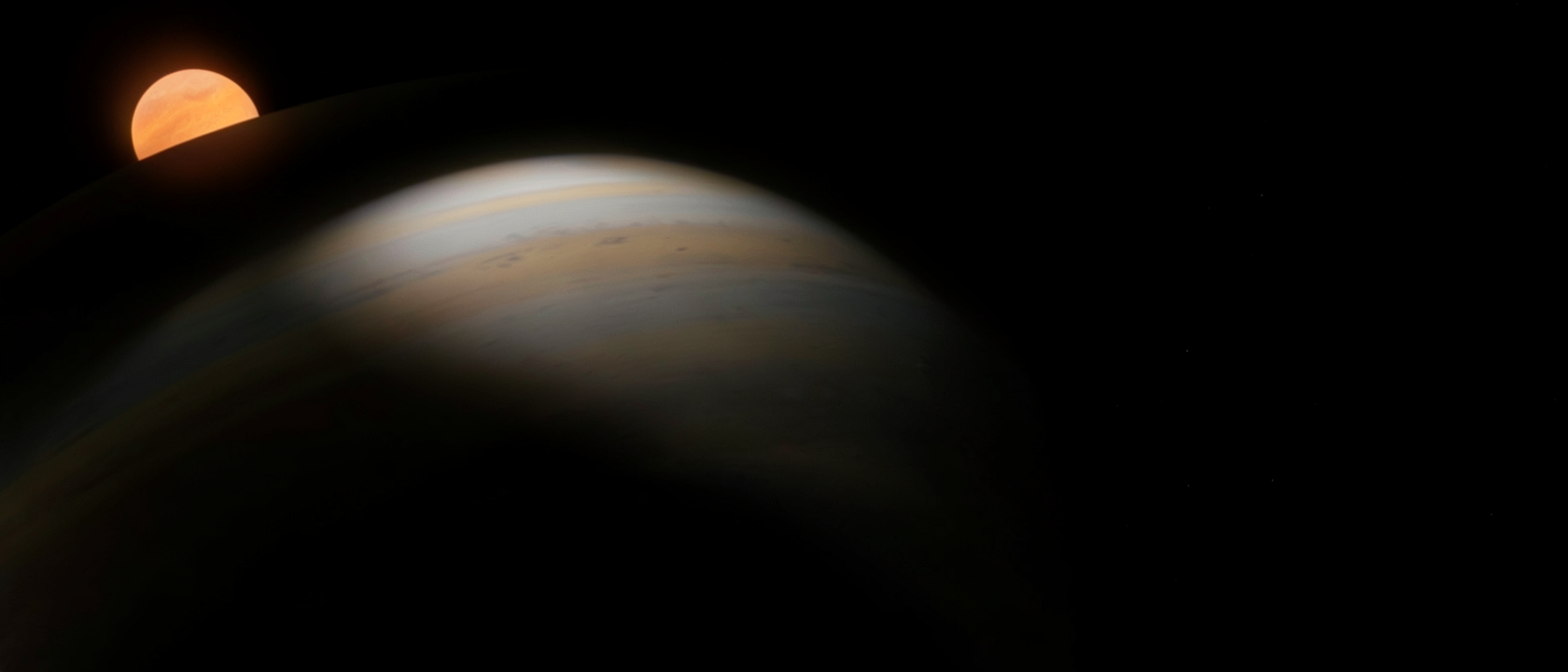
No camera has photographed Kepler-245 d, and none will from this kind of data. What exists is a light curve: a graph of the star’s brightness dipping and climbing back as the planet passes in front of it, recorded by Kepler in 2014. Any wide picture of the planet itself, with clouds or a color, is an artist’s illustration, not a photograph, and should be labeled that way.
What’s Still Open
The radius carries a small, unresolved gap: one conversion puts it near 1.89 × 10^7 meters, another near 1.933 × 10^7 meters, a difference of about 2% between catalog roundings. The method behind the mass figure isn’t stated anywhere in the record. And the corrected density of about 4.29 grams per cubic centimeter is itself a derived number, not a catalog field, the kind of figure that can shift a little as later passes through the data refine the mass and radius it’s built from. None of that makes Kepler-245 d less real. It’s a reminder to check a planet’s own numbers before repeating what’s said about it.
—
**Issues found and fixed:**, No grammar, spelling, or punctuation errors were found requiring correction, subject–verb agreement, articles, verb tense, pronoun/homophone use, spelling consistency, punctuation, and capitalization were all already correct. No relative-to-today time references (e.g. “today,” “next week”) were present; the only time references used absolute dates or year-based spans (“announced in 2014,” “recorded by Kepler in 2014”), which are acceptable and required no changes.