
A Close Pass We Can’t Vouch For, Yet
A small asteroid supposedly slipped past Earth close enough to count as a genuinely tight approach by solar-system standards, several times farther out than the Moon but still well inside what usually counts as roomy. That’s the claim, anyway. It arrived with a name, 2026 RJ, a date of September 11, 2026, and a full set of numbers, a distance, a speed, a size range, presented as though they were already settled.
Before repeating any of it, we went looking for where those figures actually came from. The usual place is NASA JPL’s Center for Near-Earth Object Studies, which maintains the public close-approach records for cataloged near-Earth objects. We could not pull up a matching entry for 2026 RJ there, and no independent record of the object turned up anywhere else either. That doesn’t mean the flyby didn’t happen. It means we don’t have a primary source standing behind it, and on this channel that gap matters more than the number itself.
How a number like this is normally built
A miss distance for a passing asteroid is never read straight off a picture. It starts as a string of point-source detections, faint dots shifting against fixed stars on successive nights, which get fed into an orbit-determination model. That model is what eventually produces a distance, a relative speed, and a time of closest approach, and the figures usually tighten as more tracking comes in over the following days. Until that trail is visible, an object you can look up, an orbit solution you can trace back to actual observations, a close-approach figure is just a number sitting on a page.
Size claims lean on something even shakier. Most small asteroids have never had radar bounced off them or their heat read in infrared, so a diameter is usually backed into from how bright the object appeared, combined with an assumed albedo, the fraction of sunlight a surface reflects. A small shiny rock and a bigger dark one can look identical in brightness, which is exactly why a responsible size claim comes as a range tied to a stated assumption, never as one tidy figure.
What we’re withholding, and why
We’re not publishing the specific distance, speed, or size numbers attached to the 2026 RJ report, because none of them currently trace back to a source we can name. We won’t call them measured, that word belongs to a figure with an instrument or a tracking campaign behind it we can point to. We won’t call them an estimate either, since even an estimate needs a stated method we can check, and we don’t have that confirmed here. What’s genuinely open is the object itself: whether 2026 RJ is a confirmed designation with a real orbit solution, how close it actually came, and how big it actually was.
Small asteroids do pass Earth at all kinds of distances often enough that a report like this is entirely plausible on its face. Plausible is not the same as checked, and the distance between those two words is the whole reason this channel exists.
The picture that wasn’t going to exist regardless
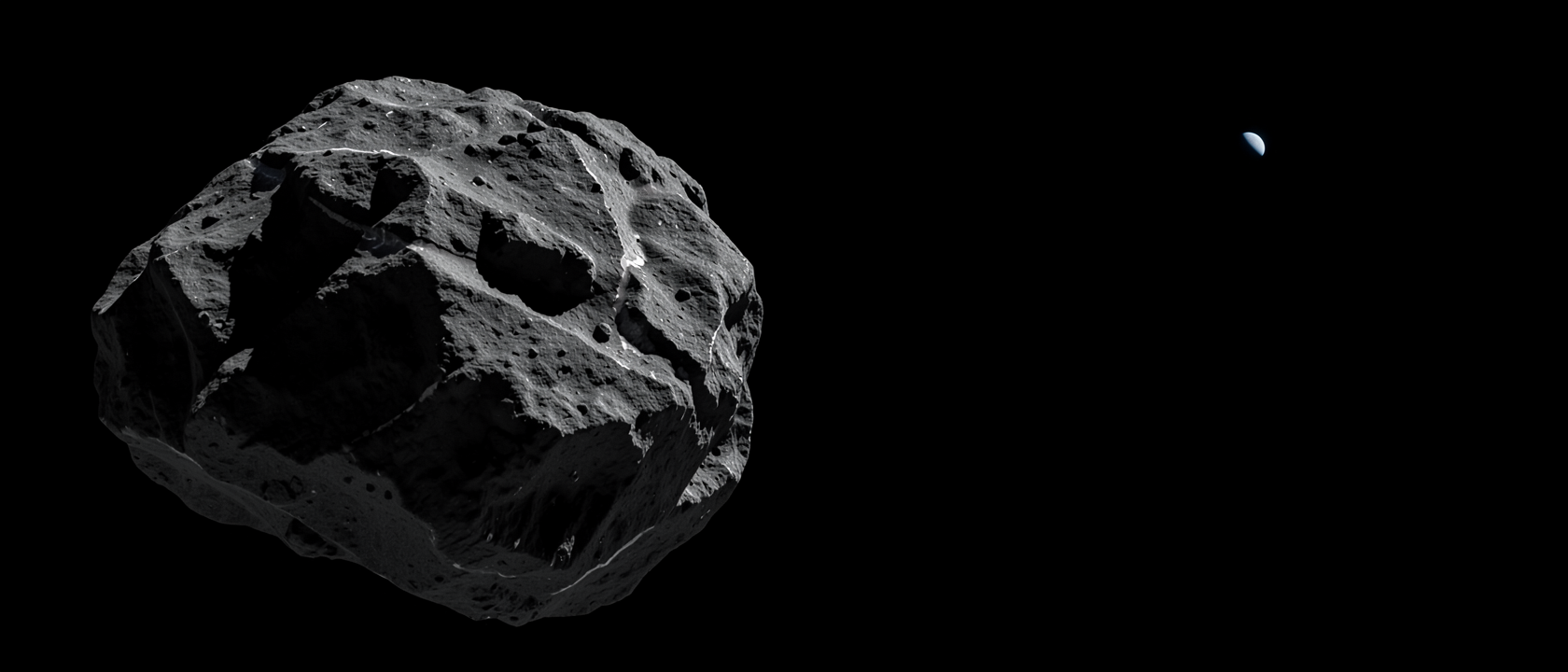
Even if every number in the original report turns out correct, there was never going to be a photograph of it. An object in the tens-of-meters range, thousands of kilometers away, sits far below what any telescope can resolve into a shape. What exists for something that small is a moving point of light on a tracking frame, or a plotted line on an orbit diagram, never an image of a rock with edges. This time, we don’t even have the plotted line to show you. So the honest version of this story is the one you just read: a claim, a search for its source, and a shrug where the number was supposed to go.